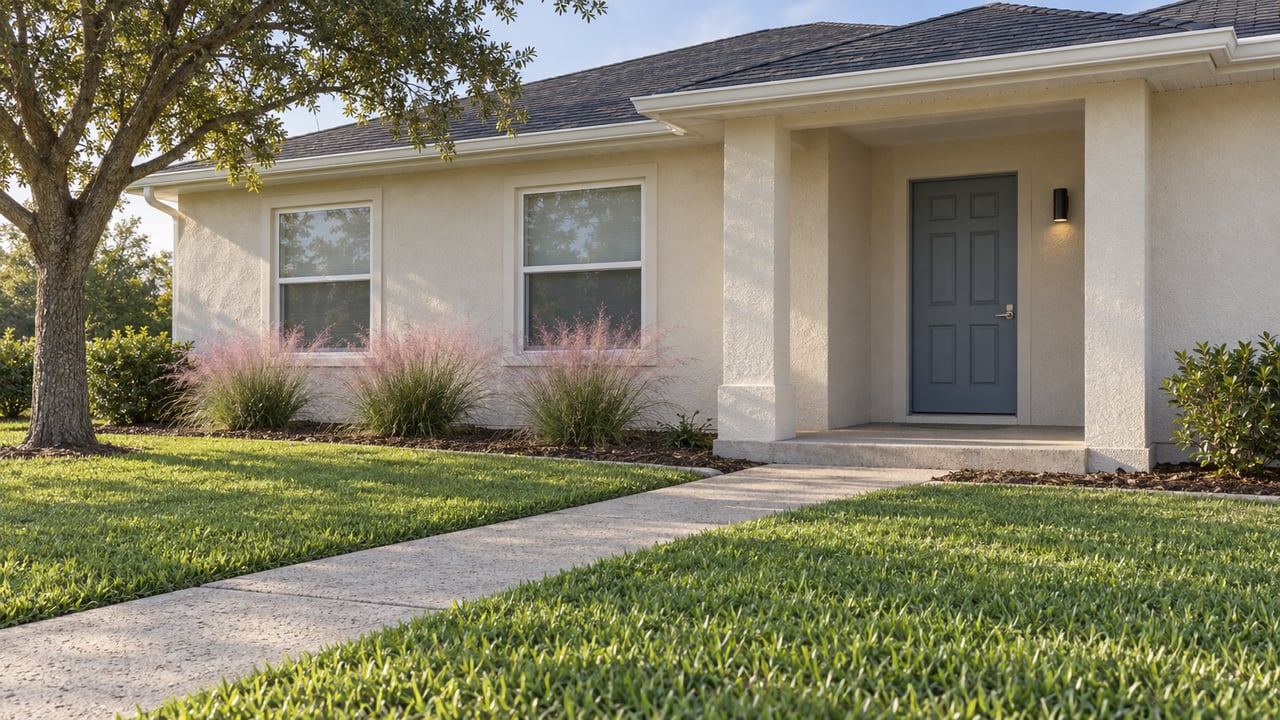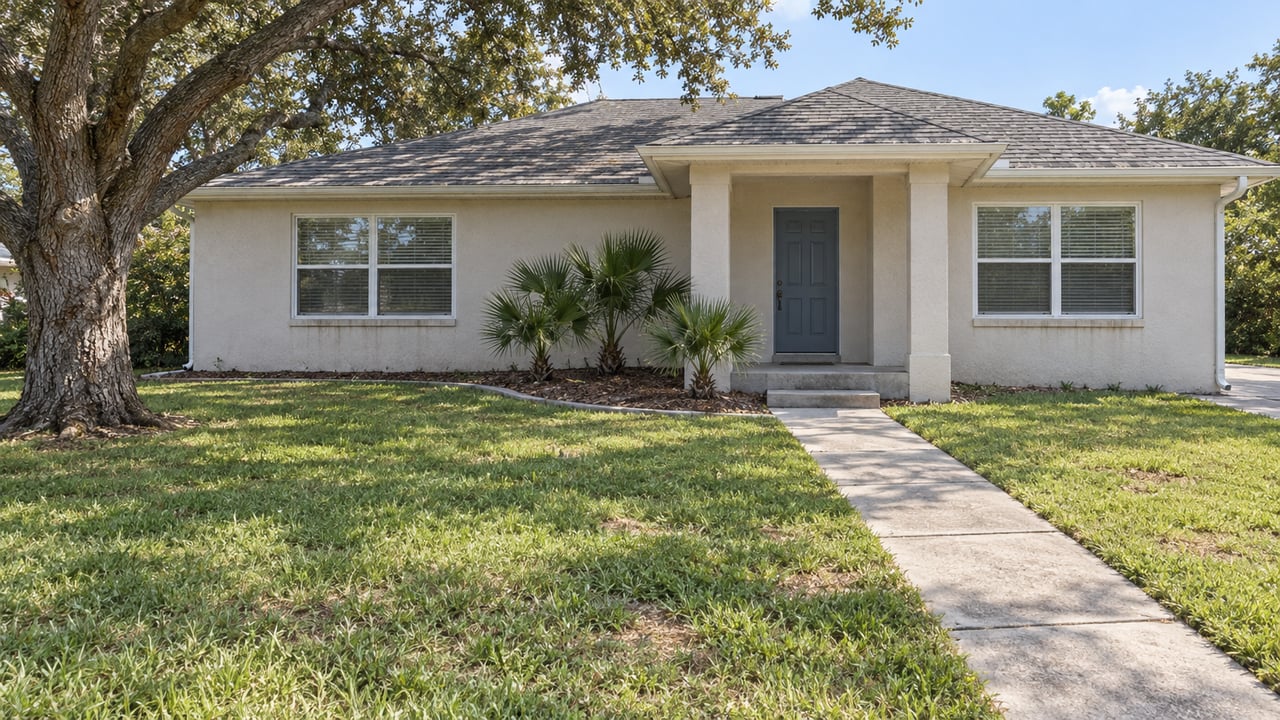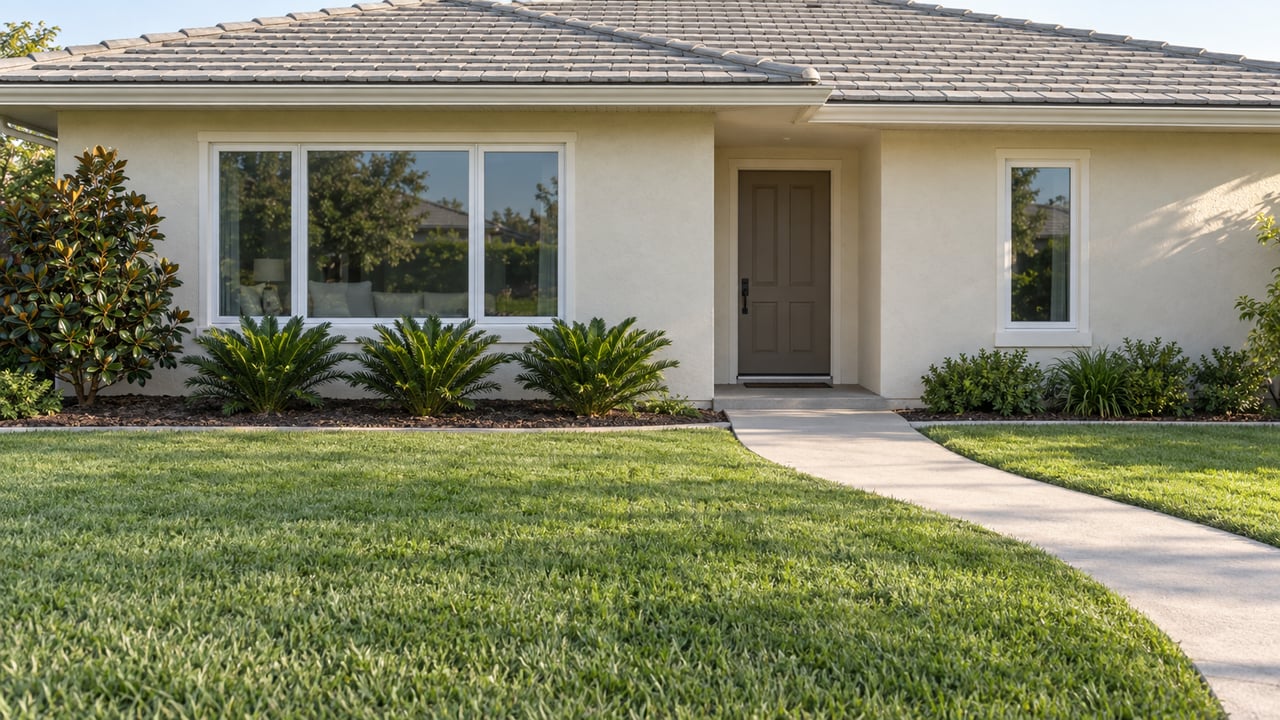
A vacant half-acre off one of the older platted streets in Marion Oaks and a nearly identical half-acre closer to Marion Oaks Manor can carry the same asking price and still represent two very different purchases. One sits on a road the county paved and took over years ago. The other sits on a road nobody has formally accepted yet. Nothing in either listing tells you which situation you're walking into.
That gap exists because of something Marion Oaks has in common with only a handful of Florida communities, and it explains almost everything happening there in 2026, including a $180 million high school that just opened its doors.
A Subdivision Platted Before Most Of Its Streets Existed
Marion Oaks was carved into roughly 15,000 acres and 28,000 individual lots during the 1960s, the same decade that produced Cape Coral, Port St. Lucie, Palm Coast, Silver Springs Shores, and Citrus Springs. That decade saw more Florida land subdivided into lots than the rest of the country combined, driven by land companies selling parcels sight unseen to buyers as far away as the Midwest and Northeast, often through mail-order catalogs, in the same years that air conditioning first became something a mortgage could finance.
Most of those original buyers never built. Decades later, Marion Oaks is still described as a mix of developed and undeveloped lots, with new construction only now filling in parcels that sat empty since the original sales era, and some of those older lots have carried tax delinquency for years. That history is why a subdivision this old still has this much open, buildable land sitting between finished homes, and why the infrastructure arriving now isn't a response to a sudden boom. It's the county finally building toward a lot count that was drawn on paper sixty years ago.
A $180 Million Answer To A Decades-Old Question
South Marion High School welcomed its first students on August 10, 2026, becoming the first new high school Marion County has opened in more than twenty years. The 115-acre campus at 1350 SW 165th Street, just west of I-75 and south of the Summer Glen golf course, cost more than $180 million to build and was constructed by Wharton-Smith, Inc. after breaking ground in December 2024. It opened at an initial capacity of 2,011 students with room to grow to 2,711 once a third-floor build-out is finished, and it was sized specifically to pull students out of Dunnellon, Westport, and Belleview high schools, all of which had exceeded capacity.
A school built for nearly 2,700 students isn't a reaction to current enrollment. It's a bet on lot count, and Marion Oaks already had that lot count on paper before most of today's residents were born. The campus even ran into the kind of ground-truth surprise that comes with building on land platted decades before anyone tested it: during construction, the district discovered unforeseen subsurface void conditions under the planned athletic field, conditions Board Member Nancy Thrower described in plain terms as the possible formation of sinkholes. The School Board approved $671,917 in July 2026 to investigate, remediate, and rebuild the field before it could open safely.
The Road That's Catching Up To The Plat
The same logic is playing out on the ground a few miles away. On July 7, 2026, the Marion County Board of County Commissioners approved a $402,211.25 purchase of a residential parcel at 110 Marion Oaks Manor to secure right-of-way for the Marion Oaks Manor Extension Road Improvement Project, a widening explicitly tied to relieving congestion on CR 484 and supporting growth near the new high school.
"We are acquiring it on the onset of the project," county spokesperson Stacie Causey told 352today of the decision to buy the entire parcel rather than risk a partial taking later.
As of late August 2026, the new four-lane stretch running from Marion Oaks Manor to just south of CR 484 is about 75 percent complete on asphalt paving, curb, and gutter work, with traffic signal poles already installed and two of three drainage retention areas finished. The project sits inside a larger $550 million package of road work planned across Marion County through 2030, of which 98 percent is state and federal funded, and Marion Oaks Manor is named directly in that plan.
None of this is new capacity chasing a hot subdivision. It's pavement extending into a grid that has been sitting there, mostly on paper, since before the interstate had this many exits.
Why The Same Subdivision Bills You Differently Than An HOA Would
Communities built by a single master developer, like Stone Creek, fund ongoing upkeep through an HOA that answers to residents. Marion Oaks never had that kind of single developer sticking around, so the county created its own mechanism instead: two separate Municipal Service Taxing Units that show up as their own line items on the property tax bill rather than as a monthly HOA statement.
| Taxing District | What It Funds | How It's Billed |
|---|---|---|
| Marion Oaks MSTU, General Services | Mowing, street lighting, waterfall maintenance, pothole repairs | Flat $50 per lot, currently, according to Marion County |
| Marion Oaks MSTU, Recreation & Facilities | Community center, annex building, sport courts, walking trail, splash pad | 1.02 mill rate |
Buyers coming from HOA-heavy markets often check a listing for one fee and stop looking. Marion Oaks runs on two, and both predate the growth wave you're reading about right now. Marion County maintains more than 60 of these special taxing districts across the county, each overseen by a five-member citizen advisory board appointed by the county commission.
What A Vote Elsewhere In The County Tells You About Older Marion Oaks Streets
Marion Oaks isn't the only legacy platted subdivision in Marion County still working through this. In Majestic Oaks, an election among all 579 property owners to create a special tax district for repaving failed by a margin of 200 to 185, with 194 owners not responding at all, and opposition ran highest in one section of the community. After that vote failed, a group of homeowners asked the county to drop the most opposed section from the plan and pursue paving in the other three, and the county commission unanimously approved the scaled-back version, at an estimated cost of $1,250 to $2,500 per homeowner to pave roughly four miles of streets.
For a lot or resale home on a street that hasn't been formally accepted for maintenance, Marion County's Office of the County Engineer can confirm whether a specific street is already on the county-maintained list, and it's worth asking before treating unpaved frontage as a temporary inconvenience someone else will fix.
The Comparison This Actually Sets Up
A newer planned community can control scarcity because a developer releases lots in phases and prices each phase against the last. Marion Oaks can't do that. Its 28,000 lots hit the market decades ago, all at once, from a company that stopped controlling the pace of sales the moment the last catalog buyer signed. That's a real part of why land and homes in Marion Oaks still price lower than comparable options elsewhere in southwest Marion County even as six-figure public infrastructure lands nearby. The school and the road are answering sixty years of platted capacity, not responding to fresh scarcity the way a new phase release would.
It's too early to know how South Marion High School or the finished Marion Oaks Manor extension will show up in resale comparisons. The campus opened on August 10, 2026, and the road segment isn't finished. What you can check today, on any specific lot or resale home, is whether the street in front of it is already paved and county-maintained, and whether the parcel carries the standard Marion Oaks MSTU assessments or something older and unresolved. That's the comparison that actually separates two similarly priced properties, long before appreciation from a new school ever enters the conversation.
A Short FAQ
Is every street in Marion Oaks maintained by the county? No. Some streets in older platted sections remain privately maintained or unpaved. The county's Office of the County Engineer can confirm the maintenance status of a specific street before you make an offer.
Will the new high school raise home values in Marion Oaks? It's too soon to know. The campus opened August 10, 2026, and there hasn't been enough time for resale activity to reflect it either way.
What is the Marion Oaks MSTU? It's a pair of county taxing districts, separate from any homeowners association, that fund general upkeep and recreation facilities specific to Marion Oaks. it appears as its own line on the property tax bill rather than a monthly HOA charge.
If you're comparing a lot or a resale home in Marion Oaks against something in a newer planned community, the road status and MSTU history are worth checking before the price per acre. Our team at Next Generation Realty works this corridor regularly and can help you verify what a specific parcel actually carries before you write an offer. Start with a free home valuation or reach out and we'll walk the comparison with you.
This article is general information, not legal, tax or financial advice. Consult a qualified professional about your situation.